

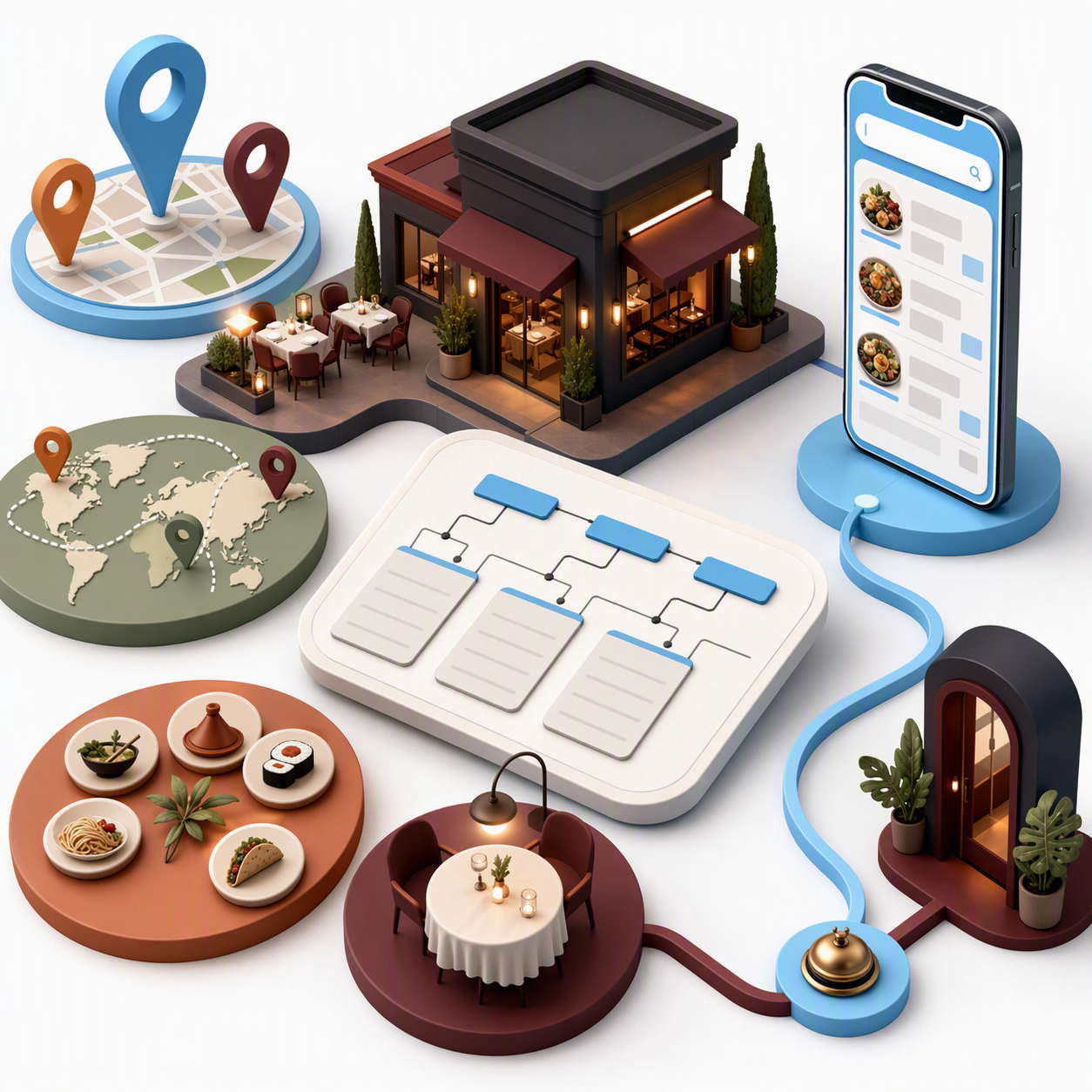
Restaurant SEO keywords help a hospitality business understand how people search for places to eat, menus, occasions, locations and bookings. The goal is not to repeat a phrase on every page. It is to map different search intents to the page that can answer them best.
This guide explains how restaurants, cafés, pubs, bistros and restaurant groups can organise keywords around menus, cuisines, locations, occasions and local searches. It complements the Hospitality SEO strategy, the Local SEO for Restaurants guide and the Google Business Profile for Restaurants guide.
Start with the restaurant’s real offer
Keyword research should begin with what the venue genuinely provides. List the cuisine, dining formats, menus, occasions, services, locations and booking options that matter to guests.
A restaurant may need terms around its main cuisine, brunch, private dining, tasting menu, Sunday lunch, group bookings, takeaway or event catering. A pub may need different language from a fine-dining venue, even when both serve food.
Ask the team which words guests use at reception and on the phone. Compare those terms with Search Console, booking-platform data and competitor page structures. The result should reflect real customer language, not a generic keyword list copied from another business.

Separate the main types of restaurant search
Restaurant searches usually fall into several connected groups. Cuisine searches describe what someone wants to eat. Location searches describe where they want to eat. Occasion searches describe why they are visiting. Menu searches help them check food and pricing. Booking searches show that they are ready to reserve.
These groups can support one another without needing one page to target everything. A cuisine page can explain the food and link to a branch. A location page can explain access and link to the current menu. A booking page can handle availability and group requirements.
Separating intent makes the website easier to navigate and reduces the risk of several pages competing for exactly the same search.
Use cuisine phrases where they describe the restaurant accurately. Depending on the business, this may include Italian, Japanese, Indian, Mediterranean, vegan, vegetarian, seafood or another specific food style.
Do not create a page for every dish unless the restaurant has enough useful information to justify it. A strong menu page can include dishes, categories, dietary information, prices where appropriate and the date or season of the menu.
If a venue offers a separate tasting menu, brunch menu or afternoon tea, create a page when the offer has distinct booking information and a genuine audience. Keep those pages current when the offer changes.
Map location keywords without creating doorway pages
Location phrases may include a town, neighbourhood, landmark, station, shopping centre or area. Use them on the homepage, location page and relevant branch pages when the venue genuinely serves that location.
A restaurant with several branches should give each one a page with local details. Include the exact address, opening times, access, parking, atmosphere, menu differences and booking route. Do not copy one branch page and change only the place name.
Do not publish pages for every nearby area where the restaurant has no meaningful presence. A page should help a guest decide whether the venue is convenient, not simply insert a town into a template.
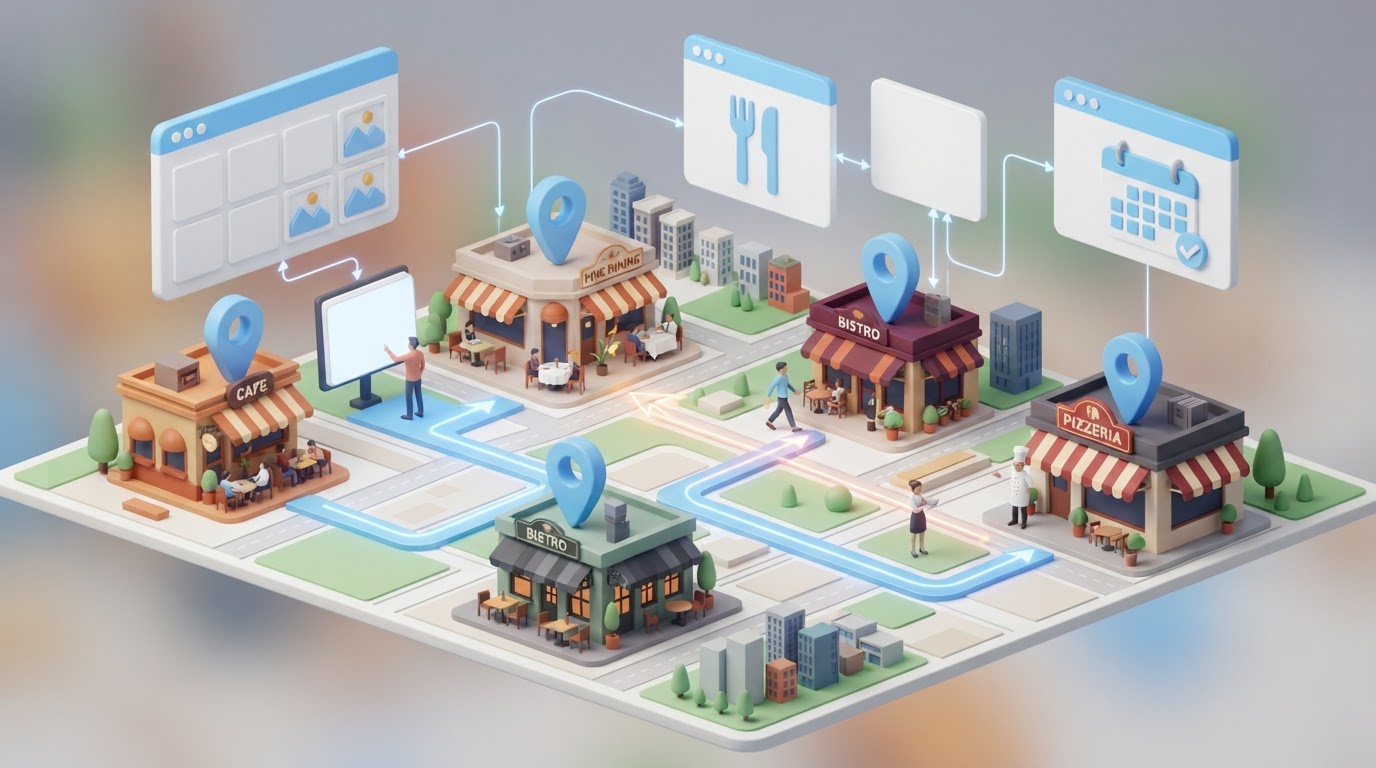
Match occasion keywords to the right experience
Occasion searches can be valuable because they describe the reason for the visit. Examples include date-night restaurant, birthday dinner, family lunch, business lunch, Christmas party, wedding reception, private dining or large group meal.
Use a dedicated page when the occasion has a specific offer, room, menu or booking process. Explain capacity, availability, menu options, deposits, timings and the enquiry route where the restaurant can provide accurate information.
Do not promise a particular atmosphere or outcome that the venue cannot consistently deliver. Show real photographs and describe the experience in clear, realistic language.
Use booking and action keywords naturally
Some searches show that a person is ready to act: book a table, reserve a restaurant, restaurant availability, group booking, private dining enquiry or restaurant near me. These phrases should guide page structure and calls to action rather than be repeated in every paragraph.
Make sure the booking route can handle the demand described on the page. A page about large parties should not send guests to a system that only accepts small table reservations.
Use clear buttons and link text. A guest should understand whether the action starts a confirmed booking, a request, a callback or a conversation with the restaurant.
Understand local and “near me” intent
Local searchers may not use a town name. They may search near a station, landmark, shopping centre or current location. The restaurant cannot control every variation, but it can provide useful local signals through its address, Google Business Profile, location page and access details.
Write about practical arrival information rather than filling a page with nearby place names. Explain walking routes, parking, public transport and the correct entrance when the information is accurate and useful.
Local visibility should support the real guest journey. If a person finds the venue through a nearby search, they need to know whether it is open, what is served and how to reserve.
Use GSC to find the language already appearing
The current GSC report includes london restaurant seo with 16 impressions, hire restaurant seo experts with 16, seo for restaurant groups with 13, seo for restaurants with 12 and local seo for restaurants with 8. It also includes seo strategy for restaurants, restaurant local seo and multi location restaurant seo.
These are marketing queries rather than guest menu searches, but they show how the site is already being discovered. Use Google Search Console to check which pages receive impressions for related terms and whether the landing page matches the search.
Do not change a page simply because it appears for an unexpected phrase. First decide whether the phrase is relevant to the restaurant and whether the page could answer it better.
Build a keyword-to-page map
Create a simple map with the target phrase, intent, page owner, location, booking route and content status. The homepage may own broad brand and cuisine intent. A branch page may own location intent. A menu page may own food and price questions. A private-dining page may own group and occasion searches.
Give each important intent one primary page. Other pages can link to it, but they should not all repeat the same title and opening copy.
Review the map when the restaurant adds a branch, changes a menu, launches an event offer or stops providing a service. Keyword strategy should follow the real business, not remain a frozen spreadsheet.
Prioritise keywords by business value
Not every phrase deserves the same investment. A high-intent booking term may be more valuable than a broad cuisine phrase, while a local occasion term may reveal a profitable service such as private dining. Consider relevance, local demand, competition, booking readiness and the restaurant’s ability to fulfil the offer.
Use Google’s people-first content guidance as a quality check. A page should answer a guest’s question and provide a realistic next step even if it never ranked for the target phrase. This keeps the strategy focused on useful content rather than keyword volume alone.

Avoid restaurant keyword cannibalisation
Cannibalisation can occur when several branch pages target the same generic restaurant phrase, when a menu page and homepage use identical titles, or when multiple occasion pages contain the same offer.
Give each page a clear job and use distinct, descriptive titles. Add branch-specific details, menu differences and booking routes. Consolidate pages when they have the same intent and no meaningful unique value.
For restaurant groups, the brand page can describe the group while locations own branch searches. This structure is especially important because the GSC report includes searches about venues competing with one another and locations cannibalising each other online.
Write titles that help guests choose
A title should state what the page offers and, where useful, where it is available. “Private Dining at [Restaurant]” is clearer than a title that lists five cuisine and location variations.
Meta descriptions can mention the menu, occasion, location and booking route when those details are accurate. Avoid exaggerated claims and do not promise availability if the page cannot confirm it.
Use headings for real questions and keep keyword use natural. A page should be comfortable for a guest to read, not sound like a list of search terms.
Measure the keywords that lead to bookings
Look at impressions, clicks, position and landing page together. Then connect the page to menu views, reservation starts, completed bookings, phone calls, directions and group enquiries.
A high-volume cuisine phrase may be less valuable than a lower-volume private-dining search if the latter produces suitable enquiries. Measure the business outcome, not just the size of the keyword.
Review pages with impressions but low clicks. The title may not match the intent, the location may be unclear or the page may lack a visible menu or booking route. Improve the decision-making information before adding more keyword variations.
For example, a branch page receiving searches for private dining should explain the room, capacity, menu options and enquiry process instead of sending every visitor to the standard table-booking form.
Common restaurant keyword mistakes
Targeting every dish separately
Use a useful menu structure unless a dish or offer has a genuinely distinct audience and page purpose.
Creating pages for nearby towns without a presence
Build location content around real branches and useful local information.
Using one phrase on every page
Assign each intent to a primary page and link between related destinations.
Ignoring occasion searches
Build specific pages for genuine group, private-dining and event offers.
Measuring impressions only
Connect keyword visibility with menus, calls, reservations and suitable enquiries.
FAQs
What are restaurant SEO keywords?
They are the words and phrases people use when searching for restaurants, cuisines, menus, locations, occasions and bookings. The useful task is mapping each intent to the page that can answer it.
How many keywords should a restaurant target?
There is no fixed number. A restaurant should cover its genuine cuisine, services, locations and occasions with useful pages rather than create thin pages for every variation.
Should a restaurant target “near me”?
It should not force the phrase into copy. Instead, provide accurate local information, a verified profile, a useful location page, current hours, menu access and a clear booking route.
How can restaurant groups avoid keyword cannibalisation?
Give the brand page, branch pages, menu pages and offer pages distinct roles. Add unique local information to each branch and consolidate pages that serve the same intent.
Final thoughts
Restaurant SEO keywords are most useful when they reveal what a guest is trying to decide. Mapping cuisine, menu, location, occasion and booking intent to clear pages creates a site that is easier to search, easier to navigate and more likely to turn local discovery into a reservation.


