


Local SEO for healthcare clinics helps people find a suitable practice when they search for treatment, support or an appointment in a particular area. A clinic may offer excellent care, but patients still need clear information about location, services, practitioners, opening hours and how to make contact.
This guide explains how private clinics, medical practices, physiotherapy clinics, osteopathy practices, mental health services and other healthcare businesses can improve local visibility without using exaggerated claims. It supports the wider Healthcare Clinics SEO strategy and is distinct from future guides about treatment searches, Google Business Profile and healthcare service-page content.
Why local search matters for healthcare clinics
Healthcare searches are often practical and location-sensitive. Someone may search for a physiotherapy clinic near them, a private medical clinic in London, a local diagnostic service or a clinic that offers a particular consultation. The searcher is usually trying to decide what to do next, not simply read a general article.
Local visibility therefore needs more than a town name added to a homepage. Patients need a consistent profile, useful service pages, trustworthy information and a straightforward route to ask a question or request an appointment.
Healthcare is also a high-trust subject. Google’s helpful-content guidance says that systems place greater weight on experience, expertise, authoritativeness and trustworthiness for topics that can affect people’s health and wellbeing. That makes accuracy and transparency central to a clinic’s search strategy, not optional extras.

Make the clinic’s local identity consistent
Start with the details that identify the practice: its real name, address, phone number, website and opening hours. Keep these details consistent across the website, Google Business Profile, professional directories, booking systems and relevant local references.
Use the name patients see on the sign, correspondence and official practice material. Adding a string of locations or treatment keywords to the business name can make the listing look artificial and create problems with platform guidelines.
If the clinic has several locations, give each genuine branch its own useful information. Show the correct address, phone number, practitioners, services, access details and appointment route. Do not create near-identical location pages that give patients no reason to choose one branch over another.
Build a Google Business Profile patients can trust
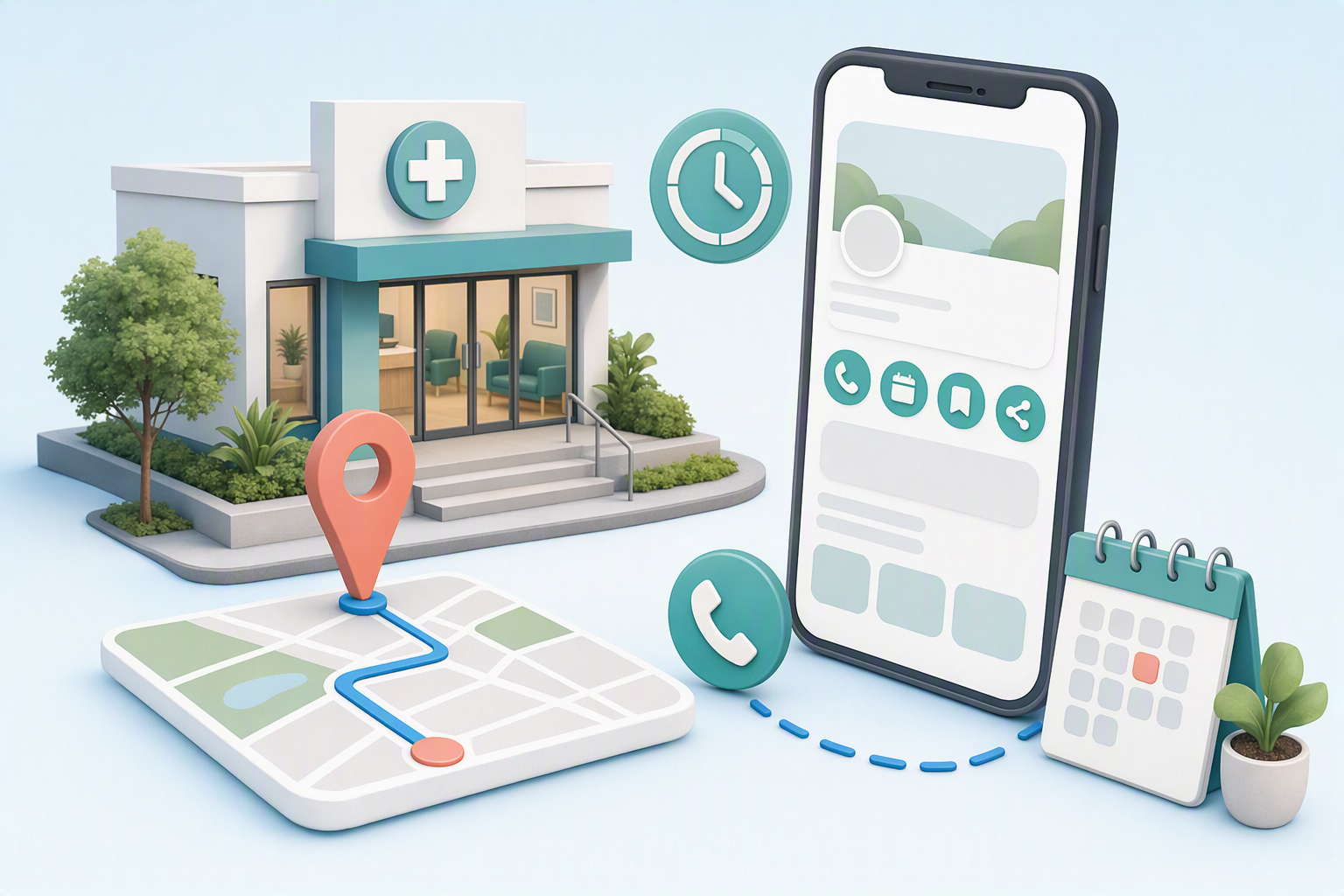
A complete Google Business Profile can help a local searcher check whether the clinic is relevant and accessible. Choose the most accurate primary category and use only additional categories that genuinely describe the business. Google’s Business Profile guidelines recommend using as few categories as necessary to represent the clinic’s core business rather than treating categories as a list of keywords.
Check the phone number, website link, opening hours and holiday hours. If the clinic works by appointment only, make that clear in the profile and on the website. Explain whether a listed time is reception availability, clinician availability or general access.
Add current photographs of the entrance, reception, treatment rooms and accessible facilities where appropriate. Do not publish patient images or any material that reveals confidential information without proper permission.
A profile should help someone decide whether to contact the clinic. It should not promise a guaranteed medical outcome or encourage a patient to share sensitive details in a public review or question.
Create service pages around real patient needs
The homepage should explain the clinic, but it should not carry every service and location keyword. Create a useful page for each important service or treatment that the clinic genuinely provides. A patient looking for physiotherapy, an ultrasound scan, a private GP consultation or a dermatology service should be able to find a page that answers their specific questions.
A strong service page explains who provides the service, what the first appointment involves, who it may be suitable for, how to prepare, where it takes place and what the next step is. It can also explain what the clinic cannot advise on and when someone should seek urgent help elsewhere.
Keep medical statements accurate and have the appropriate clinician review them. Avoid unsupported superlatives such as “best”, guaranteed results or language that pressures someone to book. Clear, restrained wording is more useful for patients and safer for a healthcare brand.
Use location pages only when they add real value
If a clinic serves several towns or has multiple branches, location pages can help patients find the right site. Each page should contain unique practical information: the exact address, transport and parking, accessibility, opening arrangements, clinicians, services available there and the correct booking route.
Do not publish a page for every nearby town if the clinic has no genuine presence or useful information for that place. A page that only replaces one town name with another can create a poor experience and may compete with the main service pages.
Link location pages to the relevant service pages and to the branch’s contact or booking route. Keep the wording natural. The aim is to help a patient choose the correct clinic, not to repeat a phrase as often as possible.

Show who delivers the care
Patients often want to know who they will meet before they book. Create practitioner profiles that state relevant qualifications, registrations, areas of practice, experience and the services each person actually provides. Use real photographs and link the profile to the services and locations connected with that practitioner.
Keep credentials current. A clinician who changes role, leaves the practice or no longer offers a treatment should not remain presented as an active provider. Make it clear who reviewed clinical content and when it was last updated.
Author and reviewer information is particularly useful for healthcare content. It gives patients a way to understand the source of an explanation and supports a more trustworthy website experience.
Make appointment enquiries easy and respectful
Local SEO creates value when a suitable visitor can take the next step. Put a clear phone number, enquiry form or booking option on service and location pages. On mobile, the phone number should be easy to tap and the form should ask only for information the clinic needs at that stage.
Tell the patient what will happen after they submit an enquiry. Explain expected response times, whether the request is for an appointment or a callback, and what to do if the matter is urgent. Do not present a normal online form as an emergency service.
Keep sensitive health information out of ordinary marketing forms unless the clinic has a secure, appropriate process for collecting it. A simple request for preferred contact details and the service of interest may be enough for the first step.
Earn and manage genuine local reviews
Reviews can help a prospective patient understand the experience of contacting and visiting the clinic. Ask for honest feedback after a genuine interaction and make the request available to patients regardless of whether you expect a positive rating.
Never ask patients to disclose a diagnosis, treatment details or other confidential information in a review. Do not offer incentives for favourable feedback. If a review includes private information, respond carefully without confirming the person’s identity or care.
Use recurring feedback to improve practical information. If several people mention difficulty finding the entrance, parking or booking page, update the website and profile rather than replying with the same explanation each time.

Improve accessibility and page experience
Patients may be searching while anxious, in pain or using a phone. Pages should load reliably, use readable type, have descriptive headings and make contact information easy to find. Important information should not depend on a hover effect, tiny text or a complicated booking interface.
Describe images with useful alt text, label form fields clearly and ensure the keyboard route works. Show accessibility details for the physical clinic, such as step-free access, parking or lift information, but be precise about what is and is not available.
Check the experience from a patient’s point of view. Can someone understand the service, find the address, see the next available route and know whether to call, book or seek urgent help?
Use content to answer pre-appointment questions
Helpful content can support local visibility when it answers questions that arise before a visit. Examples include what to bring, how to prepare for a consultation, how referrals work, what happens during an assessment, how follow-up is arranged and which clinic location provides the service.
Do not use blog posts to make a diagnosis or replace professional advice. Link health explanations to an appropriate clinician-reviewed service page and signpost urgent or emergency support when relevant. The NHS website is a useful public reference for services and urgent-care routes in the UK, but a private clinic should still provide its own accurate contact instructions.
Keep a visible update date and review content when guidance, services, staff or booking arrangements change. Outdated medical or access information can be more damaging than having no article at all.
Track visibility and patient enquiries
Measure more than rankings. Review Google Search Console queries, impressions, clicks and landing pages for terms such as private clinic seo, seo medical clinic, clinic seo and seo for private clinics. These phrases appear in the available GSC data and show existing interest around healthcare marketing.
Connect organic performance with real actions: phone calls, appointment requests, direction requests, contact-form submissions and completed bookings. A page that attracts fewer visits but produces appropriate enquiries may be more valuable than a broad page with a higher impression count.
Review performance by service and location. If one clinic branch receives visibility but not enquiries, check the booking route, service availability, trust information and practical access details before simply adding more keywords.

Common local SEO mistakes in healthcare
Using one page for every service
A general page rarely answers the questions of someone searching for a specific treatment or consultation. Give important services their own accurate page.
Publishing unreviewed medical content
Clinical claims should be checked by an appropriately qualified person and updated when circumstances change.
Creating thin town pages
Only create location pages that provide genuine local information and a useful patient route.
Ignoring practical access details
Parking, entrances, accessibility and appointment instructions can affect whether a patient attends.
Collecting sensitive information in public
Keep health details out of public reviews, profile questions and unsuitable contact forms.
FAQs
What is local SEO for healthcare clinics?
It is the process of improving a clinic’s visibility for relevant searches in the areas it genuinely serves. It combines accurate local information, useful service and location pages, trustworthy practitioner content, reviews and a clear appointment route.
Does a healthcare clinic need a Google Business Profile?
A clinic with a genuine location that patients can visit will usually benefit from an accurate Google Business Profile. The listing should reflect the real business and must not expose confidential patient information.
How many location pages should a clinic create?
Create pages for real branches or service areas where the clinic can provide unique, useful local information. Do not create a page for every town simply to insert a place name.
What should a healthcare service page include?
It should explain the service accurately, identify the provider, describe the appointment journey, show the relevant location and give a clear next step. Clinical content should be reviewed by an appropriate professional.
Final thoughts
Local SEO for healthcare clinics works best when search visibility and patient experience support each other. Accurate profiles, useful service pages, genuine local information, clear practitioner details, respectful reviews and accessible appointment routes give people the confidence to choose the right next step.


