


Patients rarely search for a dental practice in only one way. One person may search for a routine check-up, another for a private dentist, and someone else may look for help with a specific treatment or urgent problem. Understanding those differences is the purpose of dental SEO keywords: connecting the language patients use with pages that help them make a confident booking decision.
This guide explains how to organise dental search terms by intent, treatment, location and stage of the patient journey. It complements the broader local SEO for dentists guide and the dedicated Google Business Profile for dentists article.
Why dental keyword research needs patient context
A keyword is not just a phrase to insert into a page. It is a clue about what the searcher wants to do next. Someone searching “dentist near me” may be comparing practices, while “emergency dentist open today” suggests urgency. “Dental implants cost” indicates a research stage, whereas “book dental implant consultation” is closer to an appointment.
Start by asking what the patient needs to understand before contacting the practice. The answer may include availability, price guidance, treatment suitability, location, clinician experience, finance options or what happens during the first appointment. A page that answers those questions is more useful than one that repeats the word “dentist” in every paragraph.

How dental SEO keywords map to real patient journeys
Most dental searches can be organised into a few practical groups. The groups should guide pages and content, not become a rigid template that every practice follows in exactly the same way.
Practice and location searches
These include searches for a dentist in a town, neighbourhood or nearby area. Examples might include “dentist in Bristol”, “private dentist near me” or “local dentist”. A local page and an accurate practice profile can serve this intent, provided the practice genuinely operates in the area.
Treatment searches
Patients may search for “dental implants”, “teeth whitening”, “Invisalign”, “emergency fillings” or another specific service. Each important treatment should have a page that explains suitability, the consultation process, likely next steps and the route to contact the practice.
Problem-based searches
A patient may search for bleeding gums, tooth pain, a broken tooth or sensitivity before they know which treatment is appropriate. Helpful content can explain when to contact a dentist and what an assessment may involve, without attempting to diagnose the individual.
Cost and comparison searches
Queries about prices, private dental fees, finance and treatment comparisons are common at the research stage. Be transparent about what can be explained online and when an examination is needed before a reliable quote can be given.
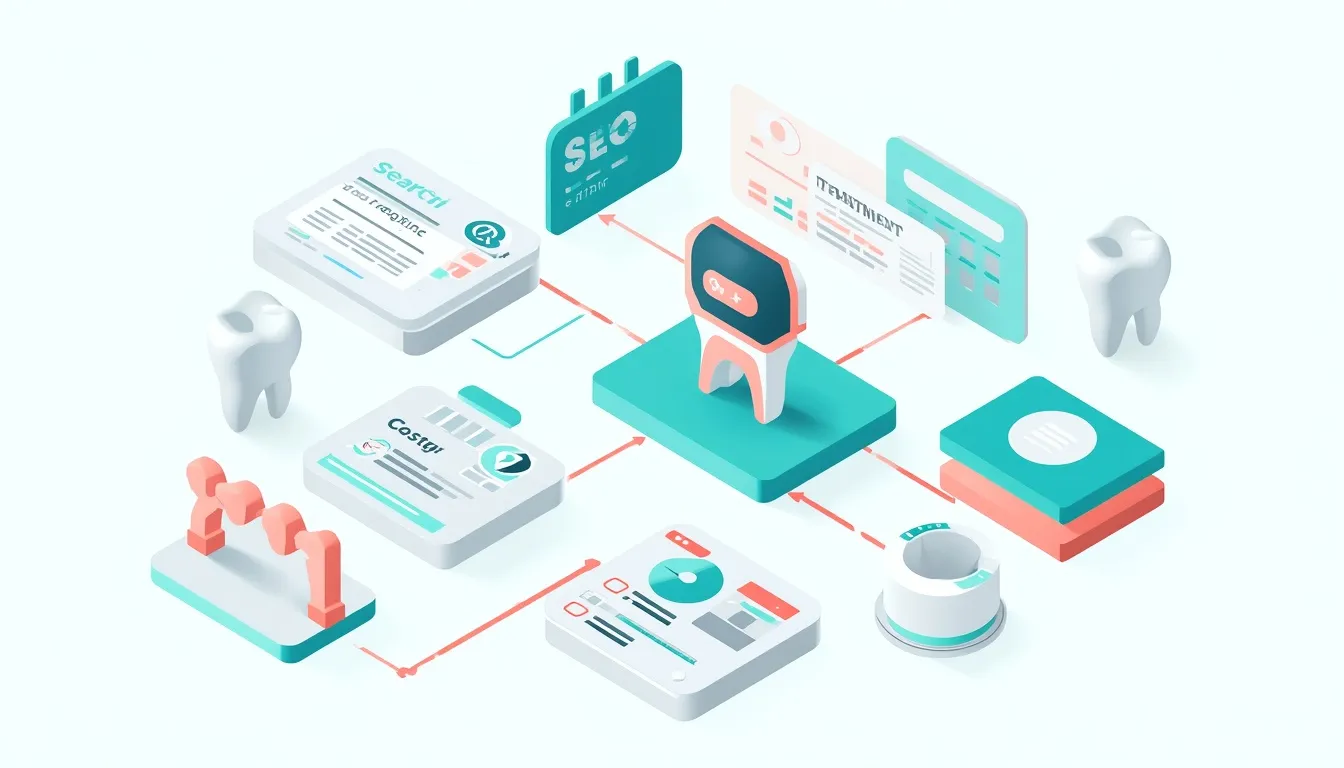
Match the keyword to the right page type
One of the most common problems in dental SEO is assigning every phrase to the homepage. The homepage can introduce the practice, but it should not be expected to rank for every treatment, location and patient question.
Use the page type that best matches the intent:
- Homepage: practice identity, broad services and the main local area;
- Location page: branch details, access, opening information and genuine local context;
- Treatment page: what the treatment is, who may need it, process, expectations and booking route;
- FAQ or advice page: questions patients ask before deciding to contact the practice;
- Appointment page: booking options, what information is needed and what happens next.
This mapping reduces internal competition. If several pages use the same title and target the same phrase, search engines and patients may not know which page is the main answer. Choose one primary page for each important intent and link to it naturally from supporting content.
Use the GSC data as a starting point
The latest Search Console data already shows opportunities around local SEO for dentists UK, local dentist SEO, SEO dentists, dentist SEO, local dental SEO, SEO services for dentists and SEO for dentists. These phrases suggest interest in dental marketing as well as local patient acquisition.
Do not copy every query into a page. Look at the wording, the current page receiving impressions and the position. A phrase appearing at position 70 may indicate that the site is relevant but lacks a focused page. A phrase appearing at position 20 may need a better title, clearer answer or stronger internal links rather than a brand-new article.
Google’s Search Console resource can help review queries, clicks and impressions. Combine that data with appointment records so the practice learns which topics produce useful enquiries, not only which phrases generate visibility.

Separate treatment keywords from symptom questions
Treatment pages and symptom content have different responsibilities. A treatment page can explain a service the practice provides and guide a suitable patient towards a consultation. Symptom content should be cautious, clear and focused on when to seek professional advice.
A page about tooth sensitivity should not promise that one treatment will solve every case. A page about implants should not imply that every patient is suitable. Good dental content acknowledges assessment, individual circumstances and clinical judgement. For general patient-facing guidance, the NHS teeth and gum information is a useful authoritative reference point.
This distinction also helps the practice decide where a phrase belongs. “Dental implants consultation” may suit a treatment page, while “what to do about a chipped tooth” may suit a helpful advice article with a clear route to urgent contact if needed.
Handle private, cosmetic and emergency searches differently
Private dental searches may include questions about fees, appointment availability, treatment quality and finance. Cosmetic searches may focus on expected results, examples, consultation and suitability. Emergency searches require clarity about hours, phone contact and what the practice can respond to.
Do not force all of these intents into one “private dentist” page. A practice can create clearer journeys by separating the pages and linking them from a well-organised services area. The language should reflect the real offer. If emergency care is only available during certain hours, say so rather than targeting an emergency phrase with an ambiguous promise.
For practices serving multiple towns, location and service can be combined only when the page has genuine useful content. “Private dentist in [town]” should not lead to a copied page with a changed place name. Explain the branch, access, services and patient route that are actually relevant.

Write titles and descriptions for the patient decision
Page titles should identify the treatment or question and the practice or location where that information genuinely matters. A title such as “Dental Implants in Manchester | [Practice Name]” is clearer than a generic title repeated across every treatment page.
Meta descriptions are not a substitute for useful content, but they can set expectations. Explain the service, the area or the next step without making unverified claims. Use the main phrase naturally and avoid turning the description into a string of treatments.
Headings should help people scan. Include related questions where they improve clarity, such as who the treatment may suit, what an appointment involves and how to request more information. Do not add a heading simply because it contains another keyword variation.
Build a content plan from unanswered questions
Once the main treatment and location pages are mapped, use patient questions to plan supporting content. Reception teams, clinicians and appointment enquiries can reveal questions that keyword tools miss. These may involve preparation, recovery, suitability, timings, payment or what happens during a first visit.
Prioritise questions that support a real decision. A useful article can link to the relevant treatment or appointment page, but it should answer the question fully enough to be valuable on its own. Avoid creating many short articles that repeat the same introduction and end with an identical call to action.
Review older content when treatments, fees, opening hours or clinical guidance changes. Outdated dental information can damage trust even if the page continues to receive impressions.

Measure keyword quality by appointment outcome
Rankings and impressions are useful indicators, but the practice should also measure calls, booking forms, consultation requests and the treatment or service mentioned in the enquiry. A phrase with fewer searches may generate better patients than a broad term with high visibility.
Where possible, connect form data and call notes with the page or campaign that generated the visit. Review whether people are asking for services the practice provides, whether they can book successfully and whether the content is creating unsuitable expectations.
Use the findings to improve page intent. A treatment page with impressions but few clicks may need a clearer title. A page with clicks but no enquiries may need stronger explanation, trust evidence or a simpler appointment route.
Common dental keyword mistakes
Using one keyword on every page
The homepage, treatment pages, local page and advice content should have different primary purposes. Repeating the same phrase everywhere makes the site less clear.
Writing for search engines instead of patients
Patients need clear explanations, expectations and next steps. A page full of keyword variants but no useful answer will not create confidence.
Ignoring local variations
British patients may use “dentist”, “dental practice”, “private dentist” or a treatment and town combination. Use the language that fits the real audience and service.
Making clinical promises
Describe services accurately and explain when a consultation is needed. Do not guarantee outcomes or use claims the practice cannot substantiate.
FAQs
What are dental SEO keywords?
Dental SEO keywords are the words and phrases patients use when searching for a dental practice, treatment, answer or appointment. They are useful when grouped by intent and mapped to pages that answer the underlying need.
How many keywords should a dental treatment page target?
One main intent is usually more useful than a large list of phrases. Use related language naturally where it improves the explanation, but keep the page focused on the treatment and patient decision.
Should a dental practice create a page for every treatment?
Create a separate page when the treatment is important, genuinely offered and has enough useful information to justify its own journey. Combine minor variations when separate pages would be thin or repetitive.
Which dental searches should a practice prioritise?
Start with services and locations that matter commercially, then consider urgency, patient questions, competition and appointment capacity. Search Console and reception data can help identify the best opportunities.
Final thoughts
Good dental keyword research is not about collecting the largest possible list. It is about understanding why patients search, giving each important intent a useful page and making the route to an appropriate appointment clear.
For broader implementation, see the SEO for dentists industry page and the local SEO for dentists guide.


