


Local SEO for gyms and fitness studios helps people find a place where they can realistically train, attend a class or start a membership. A potential member may search for a gym near home, a Pilates studio, personal training or a specific class. They need to know where the business is, what it offers, when sessions run and how to take the next step.
This guide focuses on local visibility and the member journey for gyms, studios and training businesses. It supports the wider Fitness SEO strategy and complements future articles about personal trainer leads, gym classes and Google Business Profile management.
Start with the type of member you want to attract
A large commercial gym, independent strength studio, Pilates business and personal training facility may all compete for fitness searches, but they do not offer the same experience. Decide which members the business can serve best before choosing pages and phrases.
Consider location, opening hours, equipment, class timetable, coaching style, membership model, experience level and accessibility. Someone looking for a 24-hour gym has a different need from someone looking for small-group strength training or a beginner-friendly yoga class.
Use the website to make that difference clear. A broad homepage can introduce the business, while focused pages explain memberships, classes, personal training, facilities and the first visit.
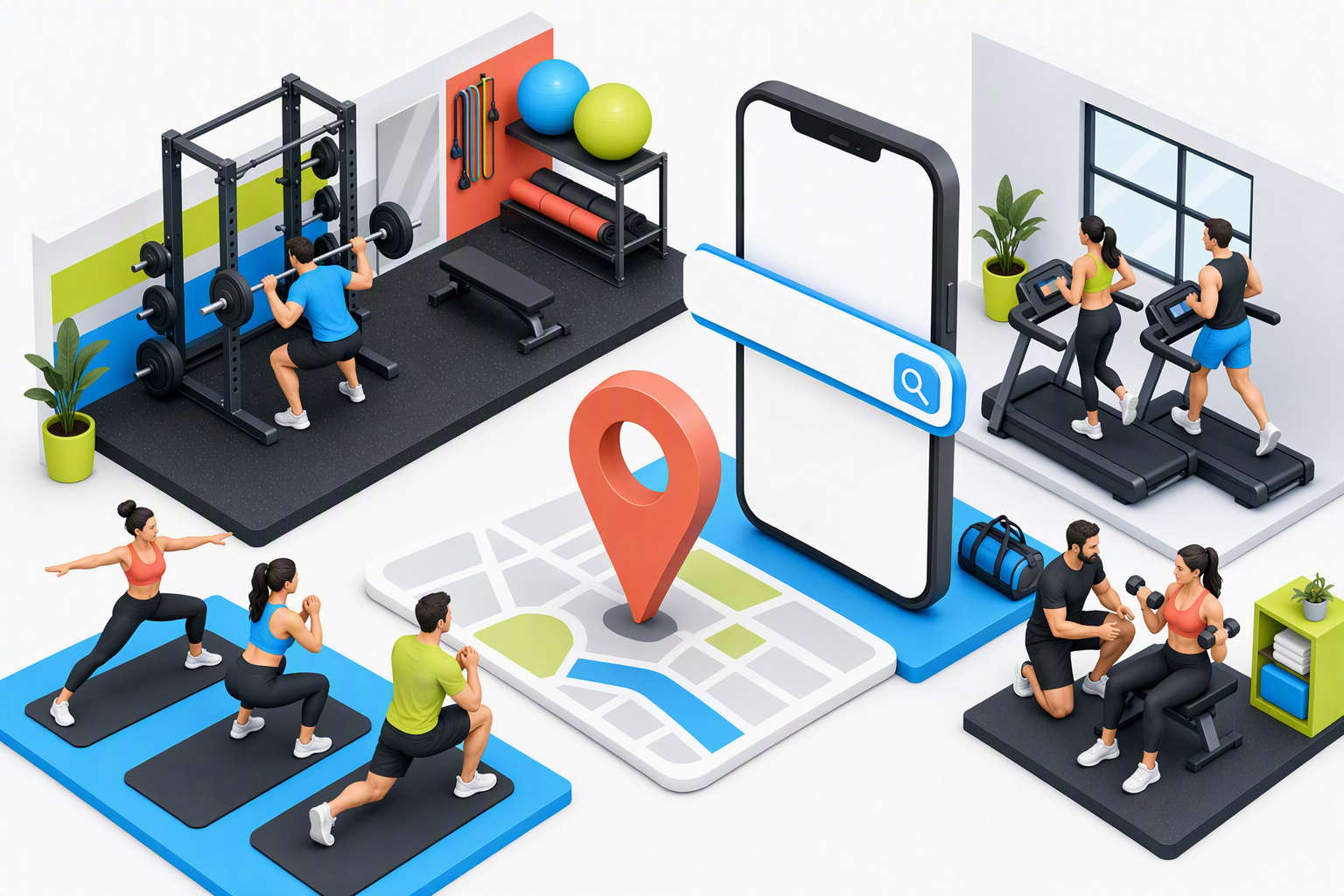
Build pages around real fitness offers
Fitness searches often include the service a person wants. GSC data shows demand around local SEO for gyms, gym SEO, SEO for fitness studios, SEO for fitness centres, classes, Pilates and personal trainers.
For the gym’s customers, that means clear pages for the actual offer: memberships, gym access, personal training, strength sessions, group classes, Pilates, yoga, assessments or introductory visits. Each page should explain who it suits and what happens next.
Do not create almost identical pages for every class time. A strong class page can show the timetable, instructor, level, location, booking route and what a new member should expect. Create a separate page where the class has a distinct audience or conversion path.
Make the location useful
Local fitness decisions are practical. Explain the address, parking, public transport, access, opening times and what is available at that location. If a studio is inside another building, tell a first-time visitor how to find the entrance.
Multiple locations need separate, useful information. Show the coaches, equipment, classes and membership differences for each branch. Avoid copying one page and replacing only the town name.
If the business serves a wider area through personal training or outdoor sessions, describe that honestly. Do not create fake branch pages for locations where the business has no genuine presence.

Turn the first visit into a clear next step
A visitor may be nervous about joining a gym or attending a studio for the first time. Explain what the first visit involves, whether a tour or induction is available, what to bring and how to contact the team.
Calls to action should match the offer. A gym might use “book a tour”, “start a free trial” or “ask about membership”. A studio may use “reserve a class” or “book an intro session”. A personal training business may use “request a consultation”.
Do not advertise a free trial if the conditions are difficult to find. Explain eligibility, duration, booking requirements and what happens after the trial. Clear expectations improve both conversion and member fit.
Explain membership options without creating confusion
Membership searches often begin with a simple question: what will I get and how much flexibility do I have? Show the difference between monthly, rolling, class-based, off-peak and short-term options where those products exist. A visitor does not need every internal pricing rule, but they do need enough information to choose the right conversation.
Explain joining fees, notice periods, access restrictions and whether classes are included. If prices depend on age, student status, location or a consultation, say so clearly. Hiding important conditions may produce more form completions in the short term but creates unsuitable enquiries and cancellations later.
Use comparison content carefully. The purpose is to help someone decide whether the gym or studio fits their routine, not to pressure them into the most expensive option. A transparent membership page can attract a more committed member than a vague promotional page.
Use Google Business Profile as a local front desk
Keep the Google Business Profile accurate: name, category, address, phone, hours, website, services and booking links. A profile that says the gym is open while the class schedule is unavailable creates a poor first impression.
Choose categories that represent the real business. A gym, fitness centre, yoga studio, Pilates studio and personal trainer may need different primary categories. Add services that genuinely exist and keep descriptions concise.
Use authentic images of the facility, equipment, classes and team. Do not show members without permission, and remove images that reveal private information on screens, forms or lockers. The profile should help a new visitor understand the space.
For profile management, follow Google’s official Business Profile guidance.

Publish the class information people need
Class searches are often time-sensitive. Show the class type, level, duration, timetable, instructor, location and booking method. Explain whether a beginner can join and what equipment is provided.
Keep the timetable connected to the booking system. If a session is full, show a waitlist or alternative where possible. If a class is seasonal, update the page and profile when the schedule changes.
Helpful content can answer questions about preparation, fitness level, clothing, accessibility and what happens in the first class. These details can remove anxiety more effectively than generic motivational copy.
Use reviews to show the member experience
Reviews can describe coaching, atmosphere, cleanliness, support, facilities and how comfortable new members felt. Ask for honest feedback after a genuine visit or membership experience without directing people to write a particular rating.
Respond professionally, especially when someone raises a concern. Do not confirm private membership details or health information in public. Invite a private conversation where appropriate and use recurring feedback to improve the member experience.
Reviews should support accurate pages rather than replace them. A new member still needs to know the practical details before joining.
Connect local SEO with member retention
Local SEO is often treated as a way to win the first visit, but the member experience influences future recommendations and reviews. Give new members clear directions, induction information, class booking instructions and a way to ask for help.
Listen to recurring feedback about timetable gaps, equipment, cleanliness, coaching and the first-week experience. These operational details can improve the business as well as the content. A page should not promise a welcoming beginner journey if the actual process leaves new members unsure where to go.
Retention content can be practical rather than promotional: how to use the booking app, what to do when a class is full, how to change a membership or how to speak to a coach. Link this information from confirmation emails and member communications where appropriate.
Make mobile membership and trial booking simple
Many local fitness searches happen on a phone. Test the route from search result to class booking, tour request, trial form or membership enquiry. Buttons should be easy to tap and the form should ask only for information needed at that stage.
Show price guidance or explain why a consultation is needed. If membership options are complicated, offer a short comparison and a route to ask questions. Do not make a visitor create an account before they can understand what is available.
Make calls and messages visible for people who need help. A contact route that nobody monitors can damage trust more quickly than having no form at all.

Support local visibility with useful content
Content can answer questions that prevent a sign-up: how to choose a gym, what to expect at an induction, whether a class suits beginners, how personal training works or what to bring to Pilates.
Write from questions the team hears. A coach, reception member or instructor can identify concerns that keyword tools miss. Link each guide to the relevant membership, trial or class page.
Avoid promises about guaranteed weight loss, health outcomes or performance. Fitness content should be encouraging but responsible and should not pretend that one programme suits every person.

Measure members and enquiries, not just rankings
Track calls, tour bookings, trial registrations, class bookings, membership enquiries and completed sign-ups where possible. Compare the quality of enquiries from the homepage, class pages, local pages and Google profile.
GSC data shows opportunities such as seo training classes with 257 impressions, fitness seo with 169, seo gyms with 152, fitnessstudio seo with 113, gym seo with 73 and seo services for gyms with 54. These are marketing-intent queries; the website should still connect them to practical member-facing outcomes.
Use Google Search Console to review queries, pages, impressions and clicks, then compare the data with actual enquiries and sign-ups. A page with fewer visits may produce better members.

Common local SEO mistakes for gyms
Using one page for every offer
Give memberships, classes, personal training and facilities enough space to answer their different questions.
Hiding the first-visit process
Explain tours, inductions, trials, equipment and what a new member should expect.
Keeping an old timetable online
Update class information across the website, booking system and Google profile.
Creating copied location pages
Add a location page only when the branch has genuine information and a distinct member route.
Measuring traffic instead of sign-ups
Connect search visibility with tours, trials, enquiries, memberships and retention feedback.
FAQs
What is local SEO for gyms?
Local SEO for gyms improves visibility when people search for nearby gyms, fitness centres, classes, personal training and membership options, while making the next step clear.
Should a fitness studio create a page for every class?
Create a separate page when a class has distinct intent, audience or booking information. Otherwise, use a well-organised class hub with clear timetable and booking details.
How can a gym get more trial sign-ups from Google?
Match search results to a clear trial page, explain conditions, show the facility, make mobile booking simple and keep availability accurate.
What should a gym measure from SEO?
Measure calls, tours, trial registrations, class bookings, membership enquiries and completed sign-ups alongside impressions and clicks.
Final thoughts
Effective local SEO for gyms and fitness studios connects a searcher with the right training environment, class or membership. Show the real offer, location and first-visit experience, keep booking information current and measure members rather than rankings alone.


